 CELEB
CELEB
The Trojan War Hero Returns . With a Nolan Twist
Christopher Nolan has never been a director content to simply retell a story. His latest ambitious project, "The Odyssey," brings Homer's ancient Greek epic to the big screen in a way that's already sparking conversation among classicists and moviegoers alike. The film takes the legendary journey of Odysseus . the cunning hero who spent a decade fighting at Troy before facing an equally long and treacherous voyage home . and filters it through Nolan's distinctive cinematic lens.
The buzz around Nolan's adaptation reached a fever pitch when early footage surfaced, drawing criticism from some corners of the internet about historical and mythological accuracy. Yet as any scholar of classical literature knows, Homer's original poem was never meant to be a rigid historical document. It was part of a living oral tradition that evolved and expanded over centuries before anyone wrote it down.
Casting Ancient Myths in Modern Stars
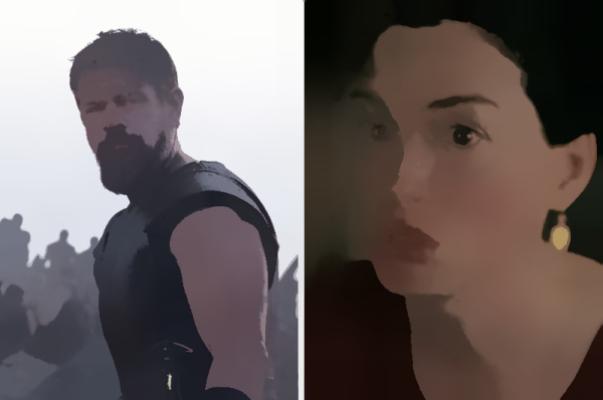
Nolan assembled an impressive ensemble for this mythological homecoming. Matt Damon portrays Odysseus as a battle-scarred warrior grappling with the haunting memories of the Trojan War . a man fundamentally broken by conflict but still driven by the pull of home. The director's frequent collaborator Zendaya steps into the divine role of Athena, the goddess who becomes Odysseus's protector and guide through impossible odds.
Back on Ithaca, the stakes feel equally personal. Anne Hathaway plays Penelope, the faithful wife who has spent years fending off dozens of arrogant suitors convinced her husband is dead. Meanwhile, Tom Holland takes on the role of Telemachus, Odysseus's son who has grown from boy to man during his father's absence, still naive in many ways but increasingly ready to defend his family's legacy. Rounding out the ensemble, Robert Pattinson embodies the cruel Antinous, leader of the suitors whose greed and arrogance set the stage for a violent confrontation.
What Nolan Changes . and Why It Works
The most significant departures from Homer's text come in how the film handles the divine pantheon, the more sensual elements of the original story, and most notably, the ending. Nolan compresses the narrative into a focused three-hour experience, cutting what would fill a 600-page book down to its dramatic essence. This isn't laziness . it's surgical storytelling that forces every scene to earn its place.
The gods receive a fresh interpretation that aligns with Nolan's preference for complex, morally ambiguous divine figures rather than the straightforward mythological archetypes of earlier adaptations. The Sirens, Scylla, the Cyclops, and countless other obstacles from Homer's tale all make their appearance, but their execution reflects Nolan's signature visual spectacle and psychological depth.
The Oral Tradition Meets Modern Filmmaking
What makes criticism of Nolan's creative choices particularly ironic is the nature of Homer's original work itself. "The Odyssey" was never a static text . it emerged from generations of bards who added, modified, and refined the story with each telling. The version we recognize today represents countless iterations and artistic interpretations. In that context, Nolan's reimagining isn't a betrayal of the source; it's a continuation of a tradition older than cinema itself.
The director has proven time and again with films like "Inception" and "Oppenheimer" that he understands how to honor source material while making something distinctly his own. His "Odyssey" promises to do the same . offering audiences a fresh entry point into one of literature's most enduring adventures while respecting the mythological roots that have captivated listeners and readers for millennia.