 CELEB
CELEB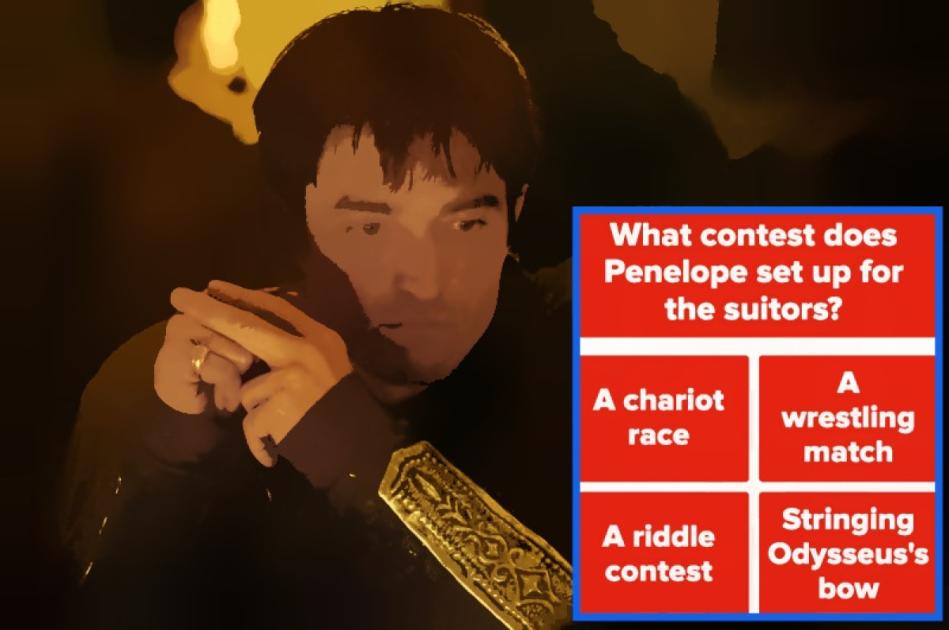
The Ancient Epic Nobody Remembers
Homer's "The Odyssey" is considered one of the cornerstones of Western literature, yet a growing body of research suggests that the vast majority of adults couldn't pass a basic quiz about its contents. From Odysseus's decade-long journey home to the cunning trick of the Trojan Horse, the epic poem that shaped storytelling itself has apparently faded from public memory.
Recent surveys conducted by literacy organizations reveal a troubling pattern: while nearly 90% of Americans claim to value literature education, fewer than 15% can correctly identify key plot points from one of history's most influential works. The disconnect between what we say we value and what we actually remember is striking.
Why Have We Forgotten?
Experts point to several factors contributing to this widespread literary amnesia. Modern curricula have increasingly deprioritized classical texts in favor of contemporary works, and the sheer volume of competing entertainment options has created what educators call "attention fragmentation." When was the last time you had a full week to dedicate to following a hero's extended sea voyage?
Dr. Margaret Chen, a professor of classical studies at Columbia University, notes that many adults remember studying "The Odyssey" in school but recall little beyond the major characters. "We teach these texts too thin," she explains. "Students memorize plot summaries for exams, but never truly internalize the narrative. A few years later, it's gone."
Can You Pass The Test?
Here's what a "basic" understanding of "The Odyssey" might include: Odysseus took ten years to return home to Ithaca after the Trojan War. He faced creatures like the Cyclops Polyphemus, the Sirens, and Scylla and Charybdis. His wife Penelope waited faithfully, famously weaving and unweaving a shroud to delay her suitors. The story ends with Odysseus reclaiming his home through cunning and violence.
Simple, right? Yet surveys show that a majority of adults cannot correctly answer even these fundamental questions. The story of the lotus-eaters, the bag of winds given by Aeolus, and the faithful dog Argus who recognized his master after twenty years. all escape the average person's memory.
What We Lose When We Forget
Beyond personal enrichment, the erosion of classical literacy carries cultural costs. "The Odyssey" gave us the concept of the hero's journey, the trickster archetype, and countless phrases and idioms that permeate modern language. Phrases like "Pandora's box" and "Trojan horse" have their roots in Greek mythology, much of which flows directly from Homer's epics.
Literacy advocate James Morrison argues that without this shared foundation, we lose common cultural reference points. "You can't appreciate countless works of art, films, and novels that reference these stories if you've never read them," he warns. "It's like being cut off from a conversation that's been going on for three thousand years."
The Good News
It's never too late to revisit this ancient masterpiece. Modern translations by authors like Emily Wilson and Robert Fagles have made "The Odyssey" more accessible than ever, with contemporary language that brings Odysseus's adventure to vivid life. Whether you read it for the swashbuckling adventure, the psychological depth, or simply to finally know what everyone else seems to have forgotten, Homer's epic awaits.