 CELEB
CELEB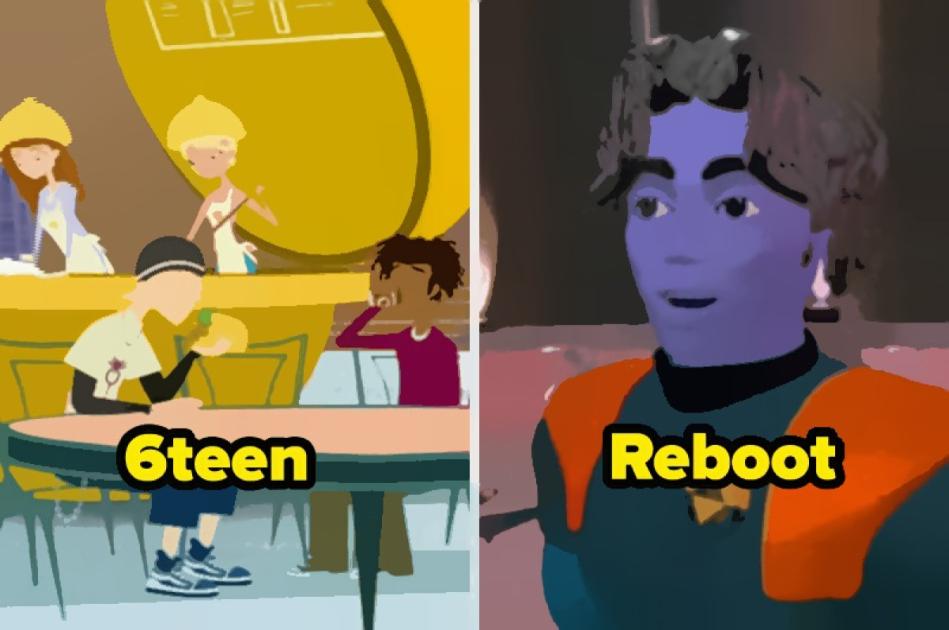
A Nostalgic Journey Through Forgotten Canadian Television
Raise your hand if you remember watching Canadian television after school instead of flipping to Nickelodeon or Disney Channel. If your hand is up, congratulations. you're part of a dwindling group of Canadians who recall a golden era of homegrown children's programming that somehow slipped through the cracks of pop culture memory. These shows were everywhere during the late 80s, 90s, and early 2000s, shaping young minds from coast to coast, and then. poof. they vanished from collective recollection.
This isn't just about nostalgia for quirky Canadian content. These programs represented a genuine commitment by Canadian broadcasters to create distinctive programming that reflected Canadian values, landscapes, and concerns. While American children's television often operated on massive budgets and wide distribution, Canadian shows carved out their own space with creativity, musical innovation, and storytelling that didn't talk down to young audiences.
The Degrassi Legacy: Where It All Started (And Why We Only Remember the Reboots)
When people think of Degrassi today, they likely conjure images from the 2000s or 2010s iterations. Degrassi: The Next Generation and its various revivals. But the franchise that essentially invented the modern teen drama format began with Degrassi Junior High in 1987 and Degrassi High that followed. These shows didn't just entertain; they addressed bullying, drug use, sexuality, peer pressure, and family dysfunction with a frankness that American television wouldn't touch for decades.
The production quality was admittedly rough by today's standards, and the costumes and hairstyles date the shows painfully. But the writing was groundbreaking. The characters felt like real kids navigating impossible situations, and the documentary-style filming created an intimacy that resonated with young viewers who saw themselves reflected in the storylines.
What many forget is that the Degrassi franchise spawned multiple spin-offs and reboots, each attempting to capture that original magic. The Zack Files, a supernatural teen comedy, ran for two seasons and developed its own passionate following. Yet somehow, only the most recent incarnation remains in public consciousness. a tragedy for anyone who remembers waiting for the latest episode of these groundbreaking series.
Musical Magic and Educational Adventures
Canadian children's programming had a secret weapon that set it apart from American competitors: an unwavering commitment to original music and educational content that never felt like homework. Shows like The Elephant Show, which aired from 1984 to 1991, featured real Canadian musicians performing original songs while teaching kids about numbers, letters, and social-emotional skills. The production values were surprisingly sophisticated, and the music was genuinely good. something parents could tolerate (and occasionally enjoy) alongside their children.
The Adventures of Dudley the Dragon took a different approach, combining live-action with puppetry to tell stories about a dragon learning to navigate the human world. Running from 1993 to 1999, the show featured Canadian actors and incorporated Canadian settings, giving young viewers a sense of place that generic American programming couldn't match. The show explored friendship, environmentalism, and cultural differences with gentle humor that appealed to both children and adults watching alongside them.
Radio Active, a teen drama from 1998 to 2000, centered on a high school radio station and the students who ran it. The show was essentially a love letter to broadcasting, featuring original music and exploring the chaos of teenage life through the lens of radio production. It addressed issues like date violence, eating disorders, and academic pressure with sensitivity and intelligence that many adult dramas still struggle to match.
The Forgotten Gems That Deserve a Second Chance
Beyond the more well-known titles, Canadian television produced dozens of shows that have been almost completely erased from popular memory. Big Wolf on Campus (1999-2002) was a horror-comedy about a teenage boy who becomes a werewolf and must protect his town from supernatural threats. It combined the humor of Buffy the Vampire Slayer with the teen drama elements of Dawson's Creek, creating something genuinely unique that aired simultaneously on Family Channel in Canada and Fox Kids in the United States.
Student Bodies (1997-1999) took a mockumentary approach to high school comedy, following a group of students at fictional Whitmore High. The show was filmed in Vancouver and featured the kind of cringe comedy that wouldn't become mainstream until shows like The Office and Parks and Recreation hit American airwaves. Its Canadian roots were often obscured in syndication, and the show has become nearly impossible to find in any format.
The Kids in the Hall, while not exclusively a children's show, featured sketches that permeated Canadian youth culture and influenced an entire generation of comedians. More directly aimed at younger audiences was the animated series The Adventures of the Little Mermaid, which was actually a Canadian-French-Japanese co-production that aired on YTV and introduced many children to the classic fairy tale.
Night Hood, a crime-fighting adventure series, followed a teenager who becomes a masked protector of his city. The show ran from 1996 to 1997 and featured surprisingly mature themes for a teen-oriented program. What It's Like Being Alone took a darker approach, following a teenage orphan who discovers he has supernatural powers and must navigate a world that fears his abilities.
Why These Shows Vanished and What We Lost
The disappearance of these shows from public consciousness isn't accidental. Canadian children's television faced unique challenges that American programming simply didn't encounter. Limited budgets meant that shows couldn't achieve the visual spectacle of American productions. Restricted distribution meant that Canadian shows often didn't reach audiences outside the country, limiting their cultural impact.
Perhaps most significantly, the collapse of the home video market for Canadian children's programming meant that shows weren't preserved in the way American content was. While shows like Saved by the Bell and Full House have been endlessly rerun, repackaged, and revisited, Canadian equivalents simply stopped existing in any accessible form. The licensing agreements, production materials, and broadcast masters for many of these shows sit in legal limbo, unavailable for streaming, sale, or even archival purposes.
This represents a genuine cultural loss. These shows documented Canadian life, values, and creative ambitions during critical decades of national development. They featured Canadian actors, musicians, writers, and directors who deserved better preservation of their work. And they shaped a generation of Canadian children who deserve the chance to share these experiences with their own kids.
So the next time someone mentions Canadian television's golden age, don't assume they're talking about Corner Gas or Schitt's Creek. Ask them if they remember what it was like to come home from school, flip on the television, and discover a uniquely Canadian vision of childhood. one that has somehow slipped away entirely, waiting to be remembered.